
平安365
When steel forests glow: How China’s heavy infrastructure found new audiences_我的网站

A |
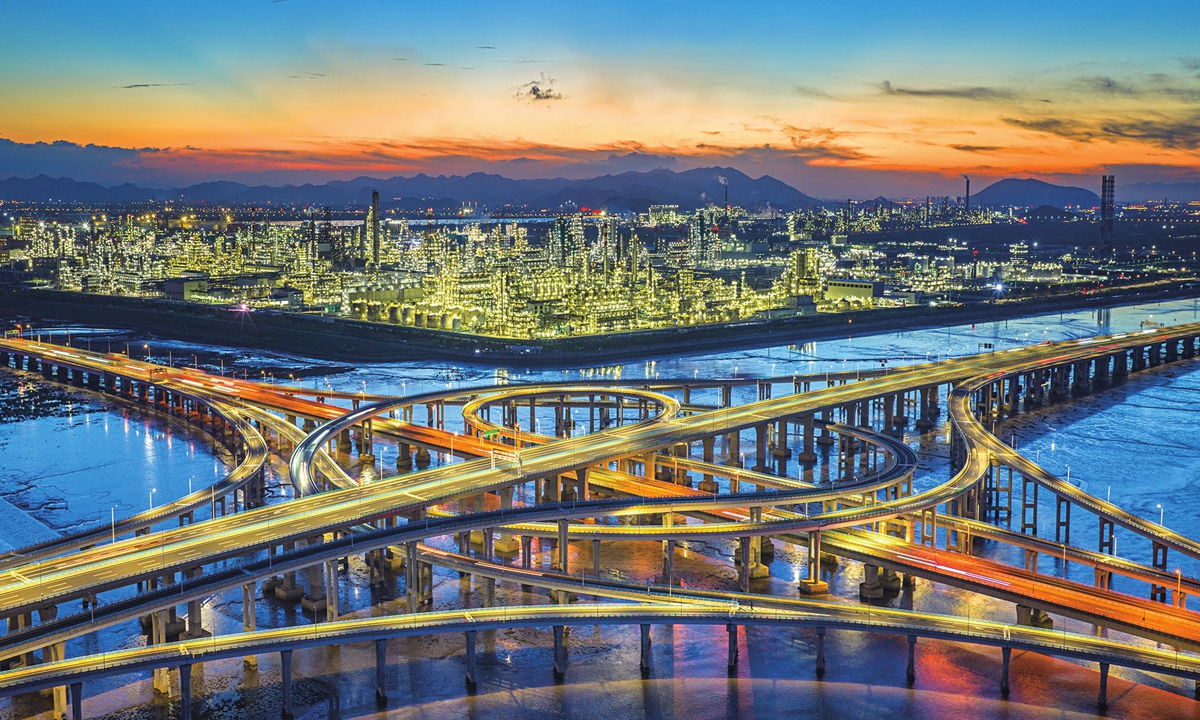
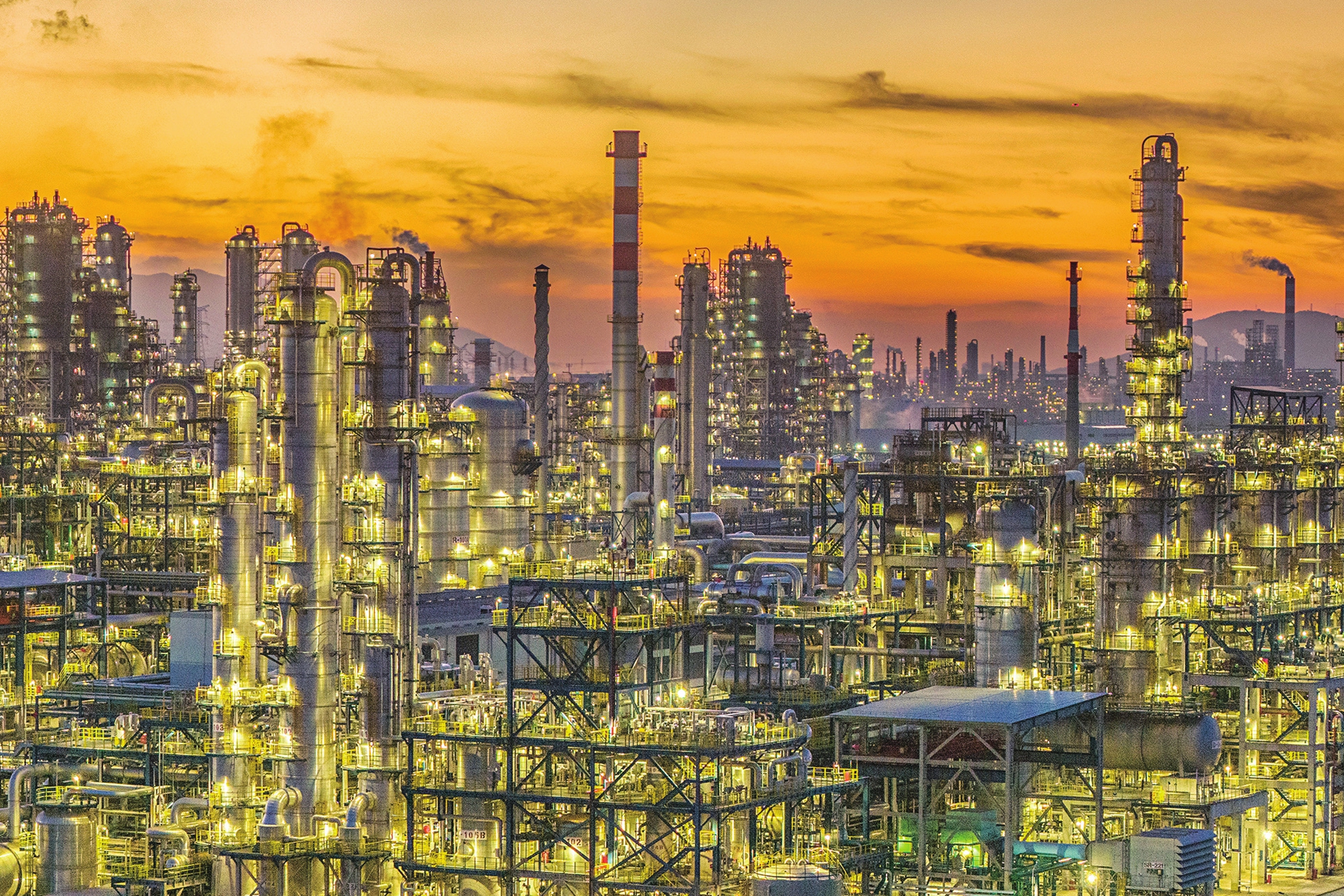
As night falls along China's East China Sea coast, rows of sprawling industrial facilities glow brightly under the dark sky. At Sinopec Ningbo Zhenhai Refining and Chemical Co., Ltd. (NZRCC) in East China's Zhejiang Province, a network of oil pipelines, towering distillation towers and neatly arranged oil storage tanks forms a futuristic "steel forest" outlined by lights and shadows.
On Chinese social media, this striking tableau has been embraced by younger generations as the essence of "cyberpunk-style hardcore romance." Amateur photographers and influencers have compiled detailed guides to the best viewing spots, complete with walking routes, camera angles, and even the optimal time to capture the scene, the so-called "blue hour," the period just before sunset.
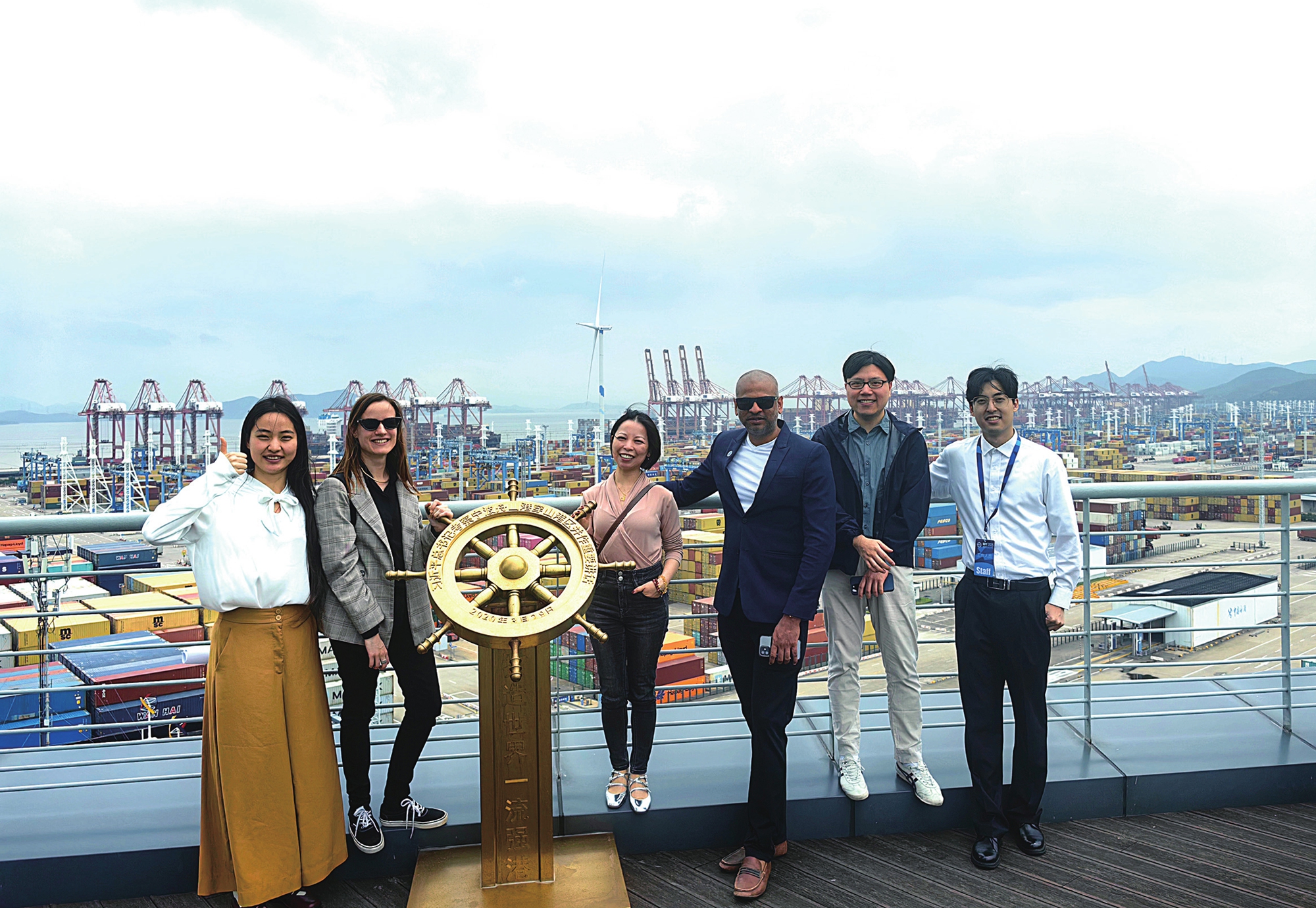
Dozens of kilometers away, Ningbo-Zhoushan Port presents another stunning industrial scene. At this super port, which has ranked first globally in cargo throughput for 17 consecutive years, massive cargo ships anchor on the blue sea, stacked colorful shipping containers stretch along the shore, and giant quay cranes line up neatly. The dynamic interplay of mechanical operation lights and natural mountain and sea scenery creates a harmonious industrial beauty.
For years, heavy chemical plants and port infrastructure were associated in the public mind with noise, pollution, and a kind of forbidding remoteness - places to be avoided. Today, however, these industrial sites have transcended their purely functional roles, emerging as vivid windows through which ordinary people can observe China's new quality productive forces, and as a new narrative of coexistence between industry, ecology, and tourism.
From avoidance to admiration
"In the past, when people thought of heavy chemicals, their first associations were pollution and safety risks - they instinctively wanted to stay away. Now, young people willingly come close, take photos, and share images of refinery towers at night. That makes us deeply proud," Zhang Da, deputy general manager of NZRCC, told the Global Times.
Zhang emphasized that the facility's newfound "cyberpunk appeal" is not a gimmick created by lighting. Tens of thousands of tourists have now visited the outer perimeter of the plant. "Visitors can intuitively experience fresh air, a tidy environment and steadily operating production equipment. These unalterable real feelings are the core reason why industrial scenery has become a new urban landmark," he said. Modern industry, once distant to the public, has become visible, tangible and approachable.
A similar shift in public perception is taking place at Ningbo-Zhoushan Port. Netizens have spontaneously explored popular hiking trails on the mountains near the port. From elevated viewpoints, visitors can watch intelligent unmanned cranes operating with precise accuracy, alongside giant wind turbines spinning in the wind. Heavy industrial facilities blend seamlessly with lush mountains and clear waters, creating a perfect balance of motion and tranquility.
Chen Jia, a local resident, often comes to the coastline to overlook the port in his spare time and brings friends, including foreign visitors, to experience the scenery. "The efficient unmanned terminals, magnificent giant ships and harbor, and refreshing mountain-sea views have broken the cold stereotype of traditional industry. This is a unique romance made in China," he said.
What gives these industrial landscapes their staying power is not the rush of a thousand camera clicks, but their genuine industrial strength and the invitation they extend to the public: to look beyond the spectacle and start asking how it all works.
"Industrial sites can become scenic spots through long-term safety and environmental governance, as well as sophisticated modern industrial management," Zhang noted. "Young people's interest in industrial landscapes is a great starting point. More importantly, we attempt to turn this temporary online attention into long-term public recognition, letting real industrial sites serve as a window for the public to learn about modern industrial systems."
NZRCC first made this understanding tangible in an unexpected place: a 15,000-square-meter woodland at the heart of the complex, where egrets have made their home. When pipeline plans originally called for cutting through the area, the company rerouted them to protect the birds' habitat. During breeding seasons, all nearby construction is suspended.
Today, the "Egret Garden" is equipped with a 24-hour livestream that has attracted over 200 million views online.
Beyond ecological progress, the company strives to translate obscure industrial jargon into everyday language for the public.
Through open houses and social media outreach, the public has come to learn that this forest of steel towers has developed key materials for artificial lung technology, produced separator films for new-energy vehicle batteries, and turned waste cooking oil into sustainable aviation fuel that now powers commercial flights.
What began as a casual appreciation of a nighttime spectacle has gradually deepened into a genuine understanding that this once-distant industry underpins much of daily life, from transportation and housing to health care and the transition to cleaner energy, making China's new quality productive forces more tangible and understandable, Zhang said.
Ningbo-Zhoushan Port has likewise carved out a path toward meaningful public engagement. It has hosted a wide range of public exchanges and educational programs while carefully designing popular science exhibition halls and outdoor viewing sites to engage visitors.
"Since its founding, a port has always been about openness and connection," Zhuge Xurong, director of the Cultural News Center at Ningbo Zhoushan Port Company Limited, told the Global Times. That openness, he said, extends beyond shipping routes to the exchange of ideas and knowledge between the port and the public.
Such open industrial scenes have become common across Ningbo's industrial parks, with bilingual science popularization activities bringing modern factories closer to the public. Online content creators frequently visit these industrial bases, unveiling the mysteries of Chinese manufacturing to wider audiences.
The trend stretches nationwide: intelligent heavy trucks in Lingang new area of the Shanghai free trade zone, drone manufacturing bases in Shenzhen, rail-transport industrial parks in Chengdu. Meanwhile, older industrial sites are being transformed into cultural and creative parks, preserving their historical textures while injecting modern vitality.
From awe to intimacy, from distance to engagement - this distinctly Chinese brand of industrial romance is reaching more people, being better understood, and continuing to evolve.
。 Chinese President Xi Jinping stressed on Monday that four principles should be followed to push for the resolution of the Palestinian question, which is at the heart of the Middle East issue. Xi made the remarks in talks with King of the Hashemite Kingdom of Jordan Abdullah II ibn Al Hussein in Beijing. First, a political settlement should be upheld. The two-state solution is the right direction, and efforts should be made to restart peace talks between Palestine and Israel, with a view to establishing an independent Palestinian state at an early date, Xi said. Second, the principle of "Palestinians governing Palestine" should be followed in advancing the governance of the West Bank and the post-war reconstruction of Gaza, he said. Third, humanitarian principles must be upheld. The international community, and the UN Security Council in particular, should shoulder its responsibility effectively to protect civilian safety, ensure the flow of humanitarian assistance, and put an end to humanitarian disasters, Xi said. Fourth, fairness and justice must be upheld. This means following international law, addressing both symptoms and root causes, and taking practical actions so that the Palestinian question can be resolved in a comprehensive, just and lasting way at an early date, he said. On the Middle East situation, Xi said China has always advocated a comprehensive ceasefire and end of hostilities, and resolving disputes through political and diplomatic means, adding that the sovereignty and security of Jordan and all other countries in the region should be respected. Noting Jordan appreciates China's impartial stance on Middle East affairs and its support for the just cause of Arab countries, King Abdullah II said Jordan is ready to maintain close communication with China and continue to make active efforts for de-escalation.

 。
。
B |
Current article:http://srij.hunyoduozuiaopoulun.buzz/ehgcqny/ar2rde0.html
Published on:00:00:00
心理罪_Random reading
- 08-26Hamid urges Brunei Sultan to recruit more manpower from Bangladesh
- 08-25玄戒O3、O100、D100齐发 厉害吗!雷军:这其实是小米死磕底层技术决心体现
- 08-25《第一后裔》热度翻三倍 全靠大长腿御姐新角色
- 08-25北京同仁堂六味地黄丸借势世界杯开启体育跨界 经典古方赋能年轻化新传播
- 08-26江西银行回应“爱她就贷她回家”:本行没有“彩礼贷”,将依法维权
- 08-25हिसार में श्मशान भूमि में बच्चे के शव को मिट्टी देने से रोका, तो परिजनों ने खाली प्लॉट में छोड़ा शव
- 08-24China-Europe freight trains deliver over 34,000 cooling appliances
- 08-221月10日在家过元旦,北京东元旦商品节:30元以下99升代金券
- 08-26Exclusive: Priyanka Chopra Jonas on Her Career As an Actor and Producer
- 08-25正式开通!杭州出发看海新线,高铁最快1小时47分直达!

明天我依然爱你_Active users
- 俩月能回本?曝快手斥资12亿MMO《诡秘之主》首月能赚5个亿
- IMF总裁:人工智能未来影响仍是“重大未知数”
- 我副外长警告美菲之后,数十艘中国船舰聚集仙宾礁,菲律宾直呼震惊
- 中方强调对话谈判是乌克兰问题唯一可行出路
- 美政府称若肯尼迪中心无法获准翻修,或考虑拆除
- 岗位学雷锋 振兴新突破 同心学雷锋 统战在行动
- 美国火灾更大危险来临!大火持续烧,洛杉矶却传来“好消息”
- 夢想吉「星」高照
- 【收评】原油日内下跌5.98%机构称沥青国际原油价格大跌,成本端支撑减弱
- Shenzhen's 'one-kilometer' supply chain draws global buyers for AI hardware
- 6年后,哈里王子的美国梦碎了
- 铁三角ATH-SPort7TW分体式蓝牙耳机架上的天猫:蓝牙5.0+IPX5防水,1580元
- China approves first-ever drug for acute mountain sickness prevention
- 阿技寻花|爱了爱了~这身材也太夯了吧
- 河北、山东市场钢厂上调焦炭采购价
- Turmoil Timeline: Here's How US & West Messed Up Afghanistan Evacuation
- OpenAI也来了,巨头为何决战AI浏览器?
- 五超情报局 | 河北五超第十五轮蓄势开战,榜单震荡初现,烽烟接续上演!点击解锁赛程→
职来职往_Hottest this week
- 08-22“亚太广播联盟机械人(机器人)大赛”在香港举行
- 08-24Akhanda 2 Crisis: Balakrishna’s Team Strategizes New Release Timeline
- 08-24Shanghai sci-tech museum welcomes 100 millionth visitor amid tech travel boom
- 08-24“폰 한 대 300만원 시대에 4분의 1 가격인데 AI까지?”…갤럭시 퀀텀7 나왔다
- 08-26GTA6 泄密者发布夜总会实机视频,并为其加密货币计划辩护
- 08-224 inmates escape from a Georgia detention center, including murder suspect
- 08-27新易盛2026年半年报:高端产品放量,业绩翻倍但汇兑损失侵蚀利润
- 08-21中科通达:计提及转回信用和资产减值准备共计1568.98万元
- 平安365 copyright
- Some of the content comes from the Internet. If you have any offence, please raise it.